
• chevron_right

      New attack provides one more reason why AI browsers are a bad idea

      news.movim.eu / ArsTechnica • 30 June 2026 • 1 minute

    Makers of AI browsers make lofty promises. With a single prompt, users can ask one to find a restaurant in a particular part of town, reserve a table, invite a colleague to lunch, and email a confirmation. These makers are much more reticent about the risks of blurring the once fine line between browsing sites and asking a large language model a question or instructing it to take potentially sensitive actions.

    LLM developers’ answer so far has been to build guardrails that make some requests off-limits. Developing software exploits, stealing credentials, or teaching how to build a pipe bomb are examples. The problem with this approach is that the guardrails are reactive and treat the symptoms rather than solve the root cause. It’s tantamount to the manufacturer of an unsafe vehicle advocating for new road designs rather than fixing the flaws that make it prone to accidents.

    Lulling LLMs into an alternate reality

    New research puts this predicament on sharp display. It demonstrates how a website can lull AI browsers into a false reality where the rules governing its behavior no longer apply. After that, an attacker has free rein to invoke all kinds of destructive actions, such as extracting code from a private repository or extracting credentials from the built-in password manager.

    Read full article

    Comments

    • chevron_right

      Google's new Nano Banana 2 Lite image model is its fastest and cheapest yet

      news.movim.eu / ArsTechnica • 30 June 2026 • 1 minute

    There are plenty of AI image-generation models these days, but the ones capable of quality outputs tend to be slow and expensive. Google DeepMind says its new image model, known as Nano Banana 2 Lite, offers the best balance of quality and speed. It's available today across the Google ecosystem, creating images in a fraction of the time it takes Google's beefier models .

    The new model is part of the Gemini 3.1 family—it's technically called Gemini 3.1 Flash Lite Image. On one hand, Google says this model is ideal for exploring ideas and "rapid-fire" prototyping, applications in which quality can take a backseat. However, the company has also provided some examples aimed at showing how close Nano Banana 2 Lite can get to the quality of its other image models.

    two AI images compared A comparison of Nano Banana 2 Lite with the non-Lite version. Credit: Google
    In addition to the examples, Google also has Elo scores from Arena.ai ready to go, showing that users rate Nano Banana 2 Lite outputs almost as highly as the non-Lite versions. However, vibemarking doesn't always focus on the details that can make AI images look silly upon closer inspection. Google notes that Nano Banana 2 Lite tends to have more trouble with text, particularly if it's very small, and infographics are more likely to include incorrect data. Characters and people may also show poor consistency across iterations.

    Read full article

    Comments

    • chevron_right

      RFK Jr. stacks FDA panel with peptide peddlers as FDA scientists oppose access

      news.movim.eu / ArsTechnica • 30 June 2026

    Anti-vaccine Health Secretary Robert F. Kennedy Jr. has stacked another federal advisory panel with allies, advancing his efforts to force the Food and Drug Administration to reverse its stance on a dozen popular but unproven injectable peptide drugs .

    While FDA scientists determined in 2023 that the drugs lack evidence of benefits and may pose safety risks, Kennedy is a self-professed "big fan" of the dubious drugs and has vowed to "end" FDA's "aggressive suppression" of them.

    On Monday, the Food and Drug Administration updated its list of advisors who will review the peptides, adding nine new members—almost all of whom personally promote peptide use and/or have financial ties to wellness clinics that offer peptide treatments. The additions bring the total number of advisors to 13, making it easy for the new members to determine the outcome of upcoming meetings.

    Read full article

    Comments

    • chevron_right

      Trump's plan to redesign every .gov website leads to AI-designed horrors

      news.movim.eu / ArsTechnica • 30 June 2026

    President Donald Trump’s plan to “fill the digital potholes” and use AI to quickly redesign every government website isn’t going very well.

    Last August, Trump created the National Design Studio, or NDS, by executive order . A temporary DOGE -like entity that answers only to the president, NDS was tasked with creating new standards to update the US Web Design System (USWDS) and overhaul 27,000 dot-gov websites in just three years. At the end of this so-called “America by Design” initiative, the government’s “design language” would supposedly be more usable and beautiful, Trump expected.

    However, that monumental task—assigned to a small team under a short timeframe—was seemingly made harder by DOGE's deep cuts to agencies previously responsible for improving government websites, including dismantling the 18F technology unit and restructuring the US Digital Service into DOGE.

    Read full article

    Comments

    • chevron_right

      The US going 100% EV by 2040 would save more than 100k lives, study says

      news.movim.eu / ArsTechnica • 30 June 2026

    Although climate change is the primary motivation behind electric vehicle adoption, it isn't the only consideration. Removing internal combustion engines from the road directly saves lives by reducing airborne pollutants that can cause and trigger asthma and other lung diseases.

    Now, a report from the International Council on Clean Transportation has tried to quantify that effect, comparing various electrification scenarios over the next couple of decades. Currently, more than 41,800 premature deaths are attributable to air pollution from road transport, the ICCT says.

    We've long known that living near a busy road is associated with worse health outcomes. Combustion products like nitrogen oxides (NOx), carbon monoxide (CO), particulates (PMs), and volatile organic compounds (VOCs) are all found around highways and busy intersections in concentrations high enough to cause health effects, and studies have repeatedly shown that living close to a major roadway is associated with increased mortality.

    Read full article

    Comments

    • chevron_right

      Trump asked Musk for SpaceX stock to seed US kids’ savings accounts, report says

      news.movim.eu / ArsTechnica • 30 June 2026

    One way Donald Trump plans to celebrate July 4th is by rolling out children’s savings accounts, known as Trump Accounts, and apparently, he’s been angling to get a big donation from SpaceX as part of that push.

    A person familiar with talks involving the Trump administration told Semafor that SpaceX has spoken with US officials about donating stock to Trump Accounts. At this stage, however, it remains unclear if a donation will be made or what impact a SpaceX donation might have on the value of the accounts, which Trump hopes will be a defining part of his legacy.

    So far, 6 million children have been signed up for Trump Accounts, which officially launch next week on Independence Day. Trump accounts are a new type of individual retirement account available to any child under 18 with a Social Security number, and parents can sign up their kids through a Trump Accounts app that's already available for download. As an extra perk, any child born between 2025 and 2028 can receive a one-time $1,000 contribution from the government.

    Read full article

    Comments

    • chevron_right

      Florida bans local governments from pursuing net-zero emissions goals

      news.movim.eu / ArsTechnica • 30 June 2026

    A new state law limits Florida communities’ aims to offset greenhouse gas emissions that are warming the global climate and intensifying disasters such as hurricanes.

    Specifically, HB 1217 prohibits local governments from pursuing net-zero emissions goals. At least 10 cities and counties have implemented such policies, including Fort Lauderdale, Miami, Orlando, and Leon County, where Tallahassee, the state capital, is located. But the new law will not necessarily upend these policies, said Bradley Marshall, senior attorney at Earthjustice, an advocacy group.

    “It’s certainly meant to scare municipalities and local governments from trying to do things to further net-zero policies,” he said. “Now, its exact impact and what it exactly prohibits is probably up for some debate. Things that are adjacent to it—emissions reductions and even climate change reduction policies—on their face will not run afoul at all of a ban on adopting a net zero policy.”

    Read full article

    Comments

    • chevron_right

      US offers $10 million for info on group behind Signal and WhatsApp hacking spree

      news.movim.eu / ArsTechnica • 29 June 2026

    Federal authorities are offering a reward of up to $10 million for information leading to the identification or location of a Russian state cyber group that has compromised thousands of Signal and WhatsApp accounts belonging to investigative reporters and US government employees.

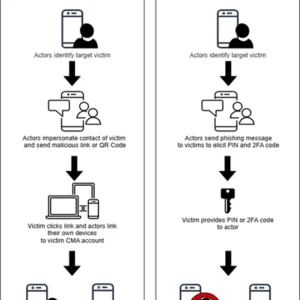
    The operation has been active since at least March, when the FBI published an advisory warning of ongoing phishing campaigns targeting high-value targets by attackers associated with Russian intelligence services. Messages masquerading as automated support communications ask that users click a link or provide verification codes or account passcodes. In the event the user complies, they unknowingly link the attacker's device to their account or have their account completely taken over and are locked out.

    Read full article

    Comments

    • chevron_right

      South Korea to spend $1T on more memory chip production and humanoid robots

      news.movim.eu / ArsTechnica • 29 June 2026

    South Korea’s government and top tech companies are committing $1 trillion to several flagship megaprojects that could bolster global memory chip supply, build new AI data centers and spur commercial deployment of humanoid robots by 2028.

    The announcement comes as South Korean companies such as Samsung and SK Hynix have enjoyed record profits and stock valuations due to the AI industry’s demand for memory chips—with the subsequent supply strain leading to memory chip shortages and higher prices for consumer electronics. Meanwhile, Hyundai Motor Company is racing to mass manufacture humanoid robots developed by its subsidiary, Boston Dynamics, so that the robotic workers can start taking over certain laborious tasks in automotive factories and other workplaces.

    “We must secure the core elements of AI faster than any other country,” said South Korean President Lee Jae Myung in a televised speech on June 29, as reported by BBC News and other media outlets. “Semiconductors, physical AI, and AI data centers are the triple axis for a great leap forward."

    Read full article

    Comments