
• chevron_right

      TCL’s German QLED ban puts pressure on TV brands to be more honest about QDs

      news.movim.eu / ArsTechnica • 19 March 2026

    Germany recently banned TCL from marketing some of its TVs as QLED (quantum dot light-emitting diode), with a Munich court ruling that the TVs lack the quantum dot (QD) structure and performance associated with QLED TVs. The decision increases pressure on TV companies to be more honest with their marketing .

    Samsung has actively campaigned against TCL’s use of the term QLED. A year ago, Samsung sent Ars Technica results from testing performed by Intertek , a London-headquartered testing and certification company, on TCL’s 65Q651G , 65Q681G , and 75Q651G . The results showed that the TVs lacked sufficient amounts of cadmium and indium (two chemicals used in QD TVs, either individually or in combination). Intertek reportedly tested the optical sheet, diffuser plate, and LED modules in each TV using a minimum detection standard of 0.5 mg/kg for cadmium and 2 mg/kg for indium.

    At the time, a TCL representative told me that TCL had “definitive substantiation for the claims made regarding its QLED televisions.”
    Read full article

    Comments

    • chevron_right

      Kagi Translate's AI answers the question "What would horny Margaret Thatcher say?"

      news.movim.eu / ArsTechnica • 18 March 2026

    If you've been using the Internet for any length of time, you've probably used a tool like Google Translate to convert webpages or snippets of text to and from languages ranging from Uzbek to Esperanto. But what if you want to translate into more esoteric "languages" like "LinkedIn Speak," "Gen Z slang," or "horny Margaret Thatcher" ?

    This week, many people across the Internet have been bemused to find that the AI-powered Kagi Translate can perform these and countless other unlikely "translation" tasks. And while the collective discovery highlights the playful, creative side of large language models, it also exposes the risks of letting users play with generalized LLM tools.

    What is a "language," really?

    While you might know Kagi best as the paid competitor to Google's ever-worsening search product , the company launched its Kagi Translate tool back in 2024 , saying at the time that it was a "simply better" competitor to tools like Google Translate and DeepL . At launch, the company said Kagi Translate "uses a combination of LLMs, selecting and optimizing the best output for each task," a fact that "can occasionally lead to quirks that we're actively working to resolve."

    Read full article

    Comments

    • chevron_right

      Musk’s tactic of blaming users for Grok sex images may be foiled by EU law

      news.movim.eu / ArsTechnica • 18 March 2026

    The European Union may soon ban nudify apps after Elon Musk's chatbot Grok emerged as a prime example of the dangers of an AI platform failing to block outputs that sexualized images of real people, including children .

    In a joint press release , the European Parliament's Internal Market and Civil Liberties committees confirmed that lawmakers voted 101–9 (with 8 abstentions) to simplify the Artificial Intelligence Act and "propose bans on AI 'nudifier' systems."

    The vote came after the European Commission concluded earlier this year that the AI Act does not prohibit "AI systems that generate child sexual abuse material (CSAM) or sexually explicit deepfake nudes." At that time, the Commission signaled that Parliament members were already proposing ways to amend the law to strengthen protections against such harmful content.

    Read full article

    Comments

    • chevron_right

      Coal plant forced to stay open due to emergency order isn't even running

      news.movim.eu / ArsTechnica • 18 March 2026 • 1 minute

    In the US, the economics of coal power generation are marginal at best, and a large number of coal plants have shut down as cheaper renewables and natural gas have surged. The Trump administration has used a number of methods to swim against this economic tide, the simplest of which has been to order plants scheduled for closure to remain operational .

    The Department of Energy has used the Federal Power Act and a Trump executive order declaring an energy emergency to block the closure of coal plants nationwide. The orders requiring plants to stay open have been accompanied by a steady stream of triumphal press releases, suggesting that the Department of Energy was taking the step solely to ensure grid reliability.

    The latest of these releases, issued on Monday, pertains to a plant in Centralia, Washington, that was scheduled to close last year to be converted into national gas generation. A Department of Energy emergency order had kept it operational over the winter, but that order was set to expire yesterday. With yesterday's new order, the plant will remain operational through mid-June. According to the press release, the action was taken "to ensure Americans in the Northwestern region of the United States have access to affordable, reliable, and secure electricity."

    Read full article

    Comments

    • chevron_right

      Never mind Band-Aids, Neanderthals had antiseptic birch tar

      news.movim.eu / ArsTechnica • 18 March 2026 • 1 minute

    Neanderthals may have used birch tar as more than just glue; it could have helped them ward off infection and even insect bites.

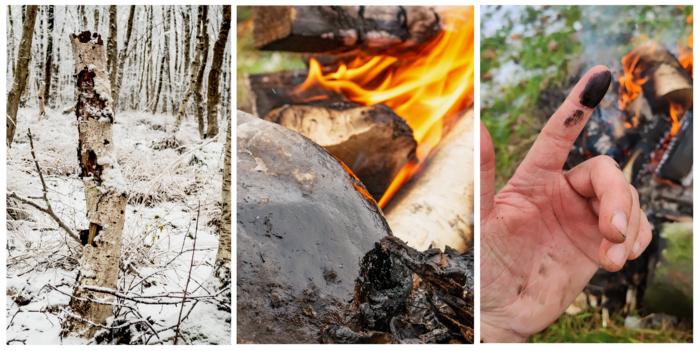
    People from several modern Indigenous cultures, including the Mi'kmaq of eastern Canada, use tar from birch bark to treat skin infections and keep wounds from festering. We know from several archaeological sites that Neanderthals also knew how to extract birch tar and that they used it as an adhesive to haft weapons. A recent study tested distilled birch tar against the bacteria S. aureleus and E. coli and found that Neanderthals could easily have used the same material as medicine for their frequent injuries .

    from left to right: a birch tree, a roll of bark on fire, and a hand with sticky black tar on it This is the simplest step-by-step tutorial for making birch tar: find a tree, set some bark on fire, get messy hands. Credit: Tjaark Siemssen, CC-BY 4.0 (https://creativecommons.org/licenses/by/4.0/)

    Medicine can be messy

    What we call "birch tar" in English has a lot of other names in multiple Indigenous languages, and it can range from an oily fluid to a brittle, almost solid tarry resin, depending on how long you heat it in the open air after extracting it from the bark. The Mi'kmaq of eastern Canada prefer the more fluid version, which they call maskwio'mi, for wound dressings and skin ointment.

    Read full article

    Comments

    • chevron_right

      Apple can delist apps "with or without cause," judge says in loss for Musi app

      news.movim.eu / ArsTechnica • 17 March 2026

    Musi, a free music streaming app that had tens of millions of iPhone downloads and garnered plenty of controversy over its method of acquiring music, has lost an attempt to get back on Apple's App Store. A federal judge dismissed Musi's lawsuit against Apple with prejudice and sanctioned Musi's lawyers for "mak[ing] up facts to fill the perceived gaps in Musi’s case."

    Musi built a streaming service without striking its own deals with copyright holders. It did so by playing music from YouTube, writing in its 2024 lawsuit against Apple that "the Musi app plays or displays content based on the user’s own interactions with YouTube and enhances the user experience via Musi’s proprietary technology." Musi's app displayed its own ads but let users remove them for a one-time fee of $5.99.

    Musi claimed it complied with YouTube's terms, but Apple removed it from the App Store in September 2024. Musi does not offer an Android app. Musi alleged that Apple delisted its app based on “unsubstantiated” intellectual property claims from YouTube and that Apple violated its own Developer Program License Agreement (DPLA) by delisting the app.

    Read full article

    Comments

    • chevron_right

      World ID wants you to put a cryptographically unique human identity behind your AI agents

      news.movim.eu / ArsTechnica • 17 March 2026

    Over the last few months, tools like OpenClaw have shown what tech-savvy AI users can do by setting a virtual cadre of automated agents on a task. But that individual convenience can be a DDOS-level pain for online service providers faced with a torrent of Sybil attack-style requests from thousands of such agents at once.

    Identity startup World thinks its "proof of human" World ID technology can provide a potential solution to this problem. Today, the company launched a beta of Agent Kit, a new way for humans to prove they are directing their AI agents and for websites to limit access to AI agents working on behalf of an actual human.

    If you recognize the name World, it's probably as the organization behind WorldCoin , the Sam Altman-founded cryptocurrency outfit that launched in 2023 alongside an offer to give free WorldCoin to anyone who scanned their iris in a physical "orb" . While WorldCoin still exists (at a current value well below its early 2024 peaks ), World has now pivoted to focus on World ID , which uses the same iris-scanning technology as the basis for a cryptographically secure, unique online identity token stored on your phone.

    Read full article

    Comments

    • chevron_right

      Arizona indicts prediction market Kalshi for running illegal gambling operation

      news.movim.eu / ArsTechnica • 17 March 2026

    Arizona’s attorney general filed criminal charges against prediction market Kalshi, accusing it of operating a gambling business without a license and offering illegal wagers on elections.

    “Kalshi may brand itself as a ‘prediction market,’ but what it’s actually doing is running an illegal gambling operation and taking bets on Arizona elections, both of which violate Arizona law,” Attorney General Kris Mayes said in a statement on Tuesday.

    While Arizona’s case is the first time criminal charges have been brought against the company, several other US states have alleged that Kalshi’s markets constitute illegal and unregulated sports betting.

    Read full article

    Comments

    • chevron_right

      FDA links raw cheese to outbreak; Makers "100% disagree," refuse recall

      news.movim.eu / ArsTechnica • 17 March 2026

    The Food and Drug Administration has linked cheddar cheese made from raw (unpasteurized) milk to a multistate outbreak of Shiga toxin-producing E. coli . But the cheese's maker, Raw Farm, is rejecting the regulator's findings and refusing to voluntarily recall its cheese.

    In an outbreak investigation notice, the FDA said seven cases have been identified in three states: California (five cases), Florida (one case), and Texas (one case). Of the seven cases, two required hospitalization. Four of the seven cases were in children age 3 or younger who are at higher risk of severe illness. No deaths have been reported.

    The onset of the seven illnesses spanned September of last year to as recently as February 13. Genetic testing of the E. coli in each case found they were highly related and, thus, likely from a common source. Of the three cases that health officials have been able to fully interview about their potential exposures, all three said they had eaten Raw Farm-branded raw cheddar cheese.

    Read full article

    Comments