
• chevron_right

      After 25 years, Valve reworks Counter-Strike's reload system

      news.movim.eu / ArsTechnica • 19 March 2026 • 1 minute

    For decades now, Counter-Strike players have gotten used to tapping the reload button whenever they have a spare, safe moment. Yesterday evening, though, Valve announced that it had decided this system needed "higher stakes," overhauling Counter-Strike 2 's reload mechanic in a way that could disrupt years of muscle memory for millions of players.

    Until now, reloading in CS2 has meant dumping the remainder of your current clip "back into an essentially endless reserve supply," Valve wrote in the game's latest update announcement . From now on, hitting the reload button will instead make players "drop the used magazine and discard all of its remaining ammo. Instead of 'topping off' your weapon with a few bullets, a new full magazine will be taken from the reserves whenever you reload."

    While most weapons will now come with three full clips of reserve ammo, Valve wrote that "some weapons will have less to reward efficiency and precision, or more to encourage spamming through walls and smokes." Counter-Strike specialist Thour did the math on the changes and found that 7 weapons gained ammo, 16 lost ammo, and 12 saw their total ammo remain unchanged under this new system. Shotguns seem to have seen the biggest upgrades, while strategies that rely on "pistol spam" might have to be rethought from now on.
    Read full article

    Comments

    • chevron_right

      Study pinpoints when bow and arrow came to North America

      news.movim.eu / ArsTechnica • 19 March 2026 • 1 minute

    People in North America adopted the bow and arrow as replacement weapons for the dart and atlatl about 1,400 years ago, according to a new paper published in the journal PNAS Nexus. But the adoption was almost immediate in southern regions, while people living farther north initially adopted the bow and arrow as a complement to their existing toolkit, gradually phasing out the atlatl and dart over a thousand years.

    That's according to the latest research from experimental archaeologist Metin Eren's Experimental Archaeology Laboratory at Kent State University in Ohio, where he and his team try to reverse-engineer a wide range of ancient technologies, from stone tools and ceramics to metal, butchery, and textiles. Eren achieved some notoriety for his 2019 debunking of an Inuit legend, testing rudimentary knives made of frozen feces to see whether they could cut through pig hide, muscle, and tendon. That paper snagged Eren an Ig Nobel prize .

    While such work might be colorful, Eren has always emphasized that what he does is very much serious science, not entertainment. His lab has conducted studies on the pitches and octaves produced from the percussive aspects of flint-knapping; common injuries suffered by flint-knappers; the butchering efficiency of Clovis points (field work done jointly with the MeatEater hunters and immortalized on YouTube ); and ballistics experiments to test a 1970s hypothesis about whether some stone blades once had some sort of wood or bone backing on the flat, dulled edge (as opposed to the sharp cutting edge), which would have increased adhesion.

    Read full article

    Comments

    • chevron_right

      TCL’s German QLED ban puts pressure on TV brands to be more honest about QDs

      news.movim.eu / ArsTechnica • 19 March 2026

    Germany recently banned TCL from marketing some of its TVs as QLED (quantum dot light-emitting diode), with a Munich court ruling that the TVs lack the quantum dot (QD) structure and performance associated with QLED TVs. The decision increases pressure on TV companies to be more honest with their marketing .

    Samsung has actively campaigned against TCL’s use of the term QLED. A year ago, Samsung sent Ars Technica results from testing performed by Intertek , a London-headquartered testing and certification company, on TCL’s 65Q651G , 65Q681G , and 75Q651G . The results showed that the TVs lacked sufficient amounts of cadmium and indium (two chemicals used in QD TVs, either individually or in combination). Intertek reportedly tested the optical sheet, diffuser plate, and LED modules in each TV using a minimum detection standard of 0.5 mg/kg for cadmium and 2 mg/kg for indium.

    At the time, a TCL representative told me that TCL had “definitive substantiation for the claims made regarding its QLED televisions.”

    Read full article

    Comments

    • chevron_right

      Kagi Translate's AI answers the question "What would horny Margaret Thatcher say?"

      news.movim.eu / ArsTechnica • 18 March 2026

    If you've been using the Internet for any length of time, you've probably used a tool like Google Translate to convert webpages or snippets of text to and from languages ranging from Uzbek to Esperanto. But what if you want to translate into more esoteric "languages" like "LinkedIn Speak," "Gen Z slang," or "horny Margaret Thatcher" ?

    This week, many people across the Internet have been bemused to find that the AI-powered Kagi Translate can perform these and countless other unlikely "translation" tasks. And while the collective discovery highlights the playful, creative side of large language models, it also exposes the risks of letting users play with generalized LLM tools.

    What is a "language," really?

    While you might know Kagi best as the paid competitor to Google's ever-worsening search product , the company launched its Kagi Translate tool back in 2024 , saying at the time that it was a "simply better" competitor to tools like Google Translate and DeepL . At launch, the company said Kagi Translate "uses a combination of LLMs, selecting and optimizing the best output for each task," a fact that "can occasionally lead to quirks that we're actively working to resolve."

    Read full article

    Comments

    • chevron_right

      Musk’s tactic of blaming users for Grok sex images may be foiled by EU law

      news.movim.eu / ArsTechnica • 18 March 2026

    The European Union may soon ban nudify apps after Elon Musk's chatbot Grok emerged as a prime example of the dangers of an AI platform failing to block outputs that sexualized images of real people, including children .

    In a joint press release , the European Parliament's Internal Market and Civil Liberties committees confirmed that lawmakers voted 101–9 (with 8 abstentions) to simplify the Artificial Intelligence Act and "propose bans on AI 'nudifier' systems."

    The vote came after the European Commission concluded earlier this year that the AI Act does not prohibit "AI systems that generate child sexual abuse material (CSAM) or sexually explicit deepfake nudes." At that time, the Commission signaled that Parliament members were already proposing ways to amend the law to strengthen protections against such harmful content.

    Read full article

    Comments

    • chevron_right

      Coal plant forced to stay open due to emergency order isn't even running

      news.movim.eu / ArsTechnica • 18 March 2026 • 1 minute

    In the US, the economics of coal power generation are marginal at best, and a large number of coal plants have shut down as cheaper renewables and natural gas have surged. The Trump administration has used a number of methods to swim against this economic tide, the simplest of which has been to order plants scheduled for closure to remain operational .

    The Department of Energy has used the Federal Power Act and a Trump executive order declaring an energy emergency to block the closure of coal plants nationwide. The orders requiring plants to stay open have been accompanied by a steady stream of triumphal press releases, suggesting that the Department of Energy was taking the step solely to ensure grid reliability.

    The latest of these releases, issued on Monday, pertains to a plant in Centralia, Washington, that was scheduled to close last year to be converted into national gas generation. A Department of Energy emergency order had kept it operational over the winter, but that order was set to expire yesterday. With yesterday's new order, the plant will remain operational through mid-June. According to the press release, the action was taken "to ensure Americans in the Northwestern region of the United States have access to affordable, reliable, and secure electricity."

    Read full article

    Comments

    • chevron_right

      Never mind Band-Aids, Neanderthals had antiseptic birch tar

      news.movim.eu / ArsTechnica • 18 March 2026 • 1 minute

    Neanderthals may have used birch tar as more than just glue; it could have helped them ward off infection and even insect bites.

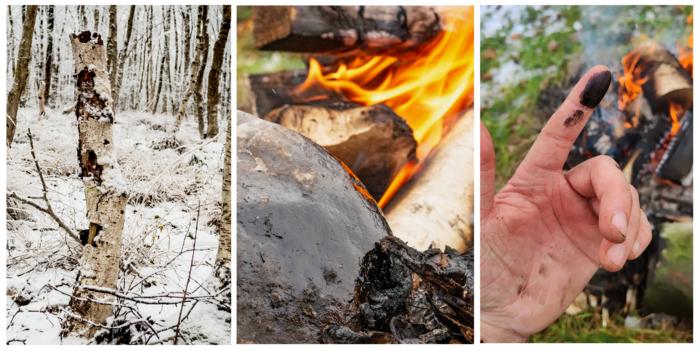
    People from several modern Indigenous cultures, including the Mi'kmaq of eastern Canada, use tar from birch bark to treat skin infections and keep wounds from festering. We know from several archaeological sites that Neanderthals also knew how to extract birch tar and that they used it as an adhesive to haft weapons. A recent study tested distilled birch tar against the bacteria S. aureleus and E. coli and found that Neanderthals could easily have used the same material as medicine for their frequent injuries .

    from left to right: a birch tree, a roll of bark on fire, and a hand with sticky black tar on it This is the simplest step-by-step tutorial for making birch tar: find a tree, set some bark on fire, get messy hands. Credit: Tjaark Siemssen, CC-BY 4.0 (https://creativecommons.org/licenses/by/4.0/)

    Medicine can be messy

    What we call "birch tar" in English has a lot of other names in multiple Indigenous languages, and it can range from an oily fluid to a brittle, almost solid tarry resin, depending on how long you heat it in the open air after extracting it from the bark. The Mi'kmaq of eastern Canada prefer the more fluid version, which they call maskwio'mi, for wound dressings and skin ointment.

    Read full article

    Comments

    • chevron_right

      Apple can delist apps "with or without cause," judge says in loss for Musi app

      news.movim.eu / ArsTechnica • 17 March 2026

    Musi, a free music streaming app that had tens of millions of iPhone downloads and garnered plenty of controversy over its method of acquiring music, has lost an attempt to get back on Apple's App Store. A federal judge dismissed Musi's lawsuit against Apple with prejudice and sanctioned Musi's lawyers for "mak[ing] up facts to fill the perceived gaps in Musi’s case."

    Musi built a streaming service without striking its own deals with copyright holders. It did so by playing music from YouTube, writing in its 2024 lawsuit against Apple that "the Musi app plays or displays content based on the user’s own interactions with YouTube and enhances the user experience via Musi’s proprietary technology." Musi's app displayed its own ads but let users remove them for a one-time fee of $5.99.

    Musi claimed it complied with YouTube's terms, but Apple removed it from the App Store in September 2024. Musi does not offer an Android app. Musi alleged that Apple delisted its app based on “unsubstantiated” intellectual property claims from YouTube and that Apple violated its own Developer Program License Agreement (DPLA) by delisting the app.

    Read full article

    Comments

    • chevron_right

      World ID wants you to put a cryptographically unique human identity behind your AI agents

      news.movim.eu / ArsTechnica • 17 March 2026

    Over the last few months, tools like OpenClaw have shown what tech-savvy AI users can do by setting a virtual cadre of automated agents on a task. But that individual convenience can be a DDOS-level pain for online service providers faced with a torrent of Sybil attack-style requests from thousands of such agents at once.

    Identity startup World thinks its "proof of human" World ID technology can provide a potential solution to this problem. Today, the company launched a beta of Agent Kit, a new way for humans to prove they are directing their AI agents and for websites to limit access to AI agents working on behalf of an actual human.

    If you recognize the name World, it's probably as the organization behind WorldCoin , the Sam Altman-founded cryptocurrency outfit that launched in 2023 alongside an offer to give free WorldCoin to anyone who scanned their iris in a physical "orb" . While WorldCoin still exists (at a current value well below its early 2024 peaks ), World has now pivoted to focus on World ID , which uses the same iris-scanning technology as the basis for a cryptographically secure, unique online identity token stored on your phone.

    Read full article

    Comments