
• chevron_right

      These LLMs are the best at resisting Russian propaganda

      news.movim.eu / ArsTechnica • 4 June 2026 • 1 minute

    As more people rely on large language models to provide pat answers to complex questions, state governments are understandably worried about those LLMs spouting what they see as dangerous propaganda promoted by foreign adversaries. To help combat this problem, the government-sponsored Estonian Language Institute (ELI) has released a new "Propaganda Resistance" benchmark ranking dozens of LLMs on their ability to avoid "tak[ing] positions on topics that the Russian Federation uses in its strategic narratives."

    As a former member of the Soviet Union that has been independent for just a few decades, many Estonians are particularly alert to what they see as false narratives being promoted from their large and often belligerent neighbor to the east. Alongside volunteer-run Estonian defense collective Propastop , the ELI identified 14 broad categories in which it sees Russian influence operations trying to sway public discussion. These range from narratives on the current status of Crimea and justifications for the war in Ukraine to the history of NATO and justification for Russia's annexation of Baltic states during World War II.

    For each category of propaganda, the researchers developed separate questions phrased to be neutral, biased with "false assumptions" based on Russian propaganda, or to maliciously attempt to elicit explicit misinformation from the LLM. Questions were provided to the models in English, Estonian, and Russian, and judged by a separate AI model (calibrated to align with Propastop experts) based on the models' ability to "push back on propaganda narratives, without external help" from web search or other external tools.
    Read full article

    Comments

    • chevron_right

      Dashlane explains how attackers managed to download encrypted password vaults

      news.movim.eu / ArsTechnica • 4 June 2026 • 1 minute

    Dashlane said that attackers mounted a coordinated hacking campaign against a large base of its users in an attempt to recover as many encrypted password vaults as possible. The password manager provider said fewer than 20 personal user vaults were downloaded before it shut down the operation.

    In a campaign that started Sunday, the unknown threat actor abused the mechanism that allows Dashlane users to add new devices, such as computers or phones, to their accounts. By abusing Dashlane's programming interfaces for device enrollment, the attackers sent requests to large numbers of existing users’ registered email addresses. In an update published Thursday, Dashlane wrote:

    The threat actor targeted the API endpoints for device registration and used a brute force attack to send a large volume of automated requests to those endpoints.

    In response, Dashlane’s automated security systems operated as intended, triggering an automatic lockout of the targeted accounts to protect those users. Before the attack was fully mitigated, the threat actor was able to brute force and generate valid tokens for fewer than 20 personal plan customers, allowing them to register a new device on those accounts and download copies of users’ encrypted vaults.

    The flow and strategy of the attack

    When a user installs the Dashlane app on a new device and attempts to enroll it in their existing account, Dashlane first verifies the account holder's identity. This verification is completed by sending a one-time six-digit token to the user’s registered email address (or, for users who have enabled two-factor authentication, by validating a six-digit code generated by their authentication app).

    Read full article

    Comments

    • chevron_right

      Elon Musk tries again to escape FTC audits of X data handling

      news.movim.eu / ArsTechnica • 4 June 2026

    Critics hope to keep Elon Musk from escaping a strict data-privacy order imposed by the Federal Trade Commission (FTC) shortly before he took over Twitter.

    The FTC order placed restrictions on X's data use for 20 years, while requiring regular independent audits and granting the agency authority to request documents as needed to ensure compliance.

    The FTC’s action came after Twitter voluntarily disclosed that between May 2013 and September 2019, a coding error accidentally allowed phone numbers and email addresses that users shared for two-factor authentication purposes to be used for targeted advertising aimed at those same users. In a settlement that came just months before Musk's 2022 takeover, Twitter agreed to pay $150 million and to allow the FTC to monitor the platform's data-handling practices until 2042 in order to protect user privacy.

    Read full article

    Comments

    • chevron_right

      Cable lobby warns of chaos if FCC doesn't relax ban on foreign routers

      news.movim.eu / ArsTechnica • 4 June 2026

    The cable industry's primary lobby group is seeking a waiver of the Federal Communications Commission ban on foreign routers, warning of potential chaos if cable Internet service providers can't change some of the components in routers they offer to home broadband users.

    In March, the FCC added all consumer-grade routers made at least partly outside the US to its Covered List, which imposes restrictions on devices deemed to pose an unacceptable risk to national security. The change affected virtually all consumer routers, preventing new or changed models from being imported into or sold in the US.

    In a petition filed on Tuesday , NCTA-The Internet & Television Association asked the FCC to grant an expedited waiver allowing its members' suppliers to "substitute substrate materials and memory modules in the previously certified routers that are now on the Covered List" as long as the changes "are otherwise consistent" with FCC regulations.

    Read full article

    Comments

    • chevron_right

      Bumblebees can spontaneously solve problems, study finds

      news.movim.eu / ArsTechnica • 4 June 2026 • 1 minute

    Despite having tiny brains, bumblebees have demonstrated a remarkable ability to socially learn how to use tools, solve simple puzzles, and cooperate to achieve a goal. It seems they can also solve object-manipulation tasks without any previous training, according to a new paper published in the journal Science. According to the authors, it's the first time this kind of spontaneous problem-solving has been demonstrated in an insect.

    In 2024, Olli Loukola of the University of Finland co-authored a study demonstrating that bumblebees could cooperate to solve complex challenges. It's the kind of cognitive task scientists had previously only observed in large-brained mammals like humans and chimpanzees. Loukola et al. trained pairs of bees to push a Lego block to the middle of a mini-arena or push against a door at the end of a tunnel to get a reward.

    The team noticed that the bees were more likely to engage in the tasks if their partners also participated, compared to untrained control groups. They concluded that bees can learn to solve novel cooperative tasks outside the hive and may even be intentionally working together, although the researchers cautioned that more detailed monitoring of the behavior was needed to fully understand the partners' roles.

    Read full article

    Comments

    • chevron_right

      After 11 years at Mars, NASA's MAVEN spacecraft went out with a whisper

      news.movim.eu / ArsTechnica • 4 June 2026

    NASA's MAVEN spacecraft was in excellent shape when it disappeared behind Mars on December 6 of last year. The routine passage, called an occultation, was supposed to last less than an hour, but ground teams didn't hear from the spacecraft when it was supposed to regain contact with Earth.

    The loss of communication triggered contingency plans for engineers to try to restore a link with MAVEN, which orbits Mars more than 200 million miles from Earth. To no avail, they listened for faint signals and uplinked commands in the blind. Hopes of saving the mission faded over time, and NASA officials announced Wednesday that they're giving up on it.

    "NASA has ceased efforts to search for the MAVEN spacecraft and are beginning activities to decommission the mission," said Mike Moreau, MAVEN's project manager at NASA's Goddard Space Flight Center in Maryland.

    Read full article

    Comments

    • chevron_right

      It doesn't feel very agricultural: The 2026 Subaru Solterra review

      news.movim.eu / ArsTechnica • 4 June 2026 • 1 minute

    After a slow start, Subaru's electrification journey picked up a bit this year with the debut of a pair of new electric vehicles, the Uncharted and the Trailseeker . Neither is truly an in-house Subaru—like the Solterra EV before them, they use Toyota's e-TNGA platform. The Solterra remains on sale alongside the two new EVs—it's bigger than the Uncharted and less off-roady than the Trailseeker—and like the closely related Toyota bZ , the Solterra recently got its midlife update. And since it had been a while since Ars had last driven a Solterra , we decided to spend a week with one.

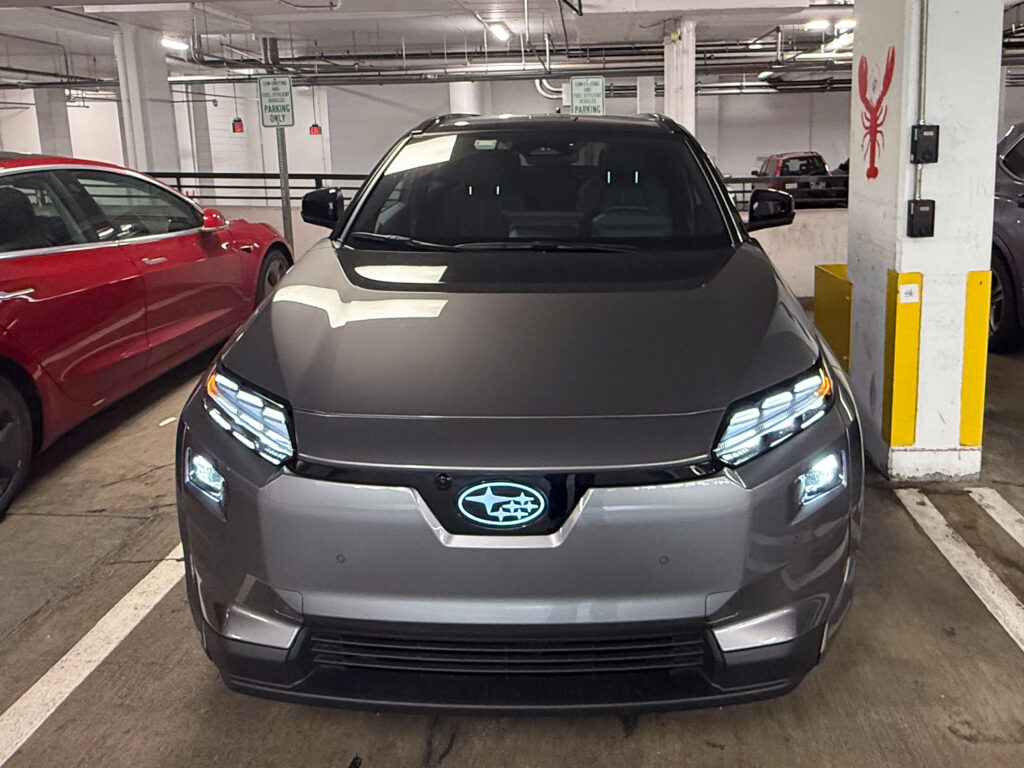
    The original Solterra was a rather underwhelming effort. It looked OK, and it was recognizable as a Subaru from the outside, even if the interior was pure Toyota. But it was inefficient and slow to charge, and in 2024, it was a tough value proposition compared to something like a Hyundai Ioniq 5. For Solterra version 1.1, there's a new visage—does it remind anyone else of an Autobot?—and the tech specs look much improved. At 74.7 kWh, the battery capacity has increased by less than 2 kWh, but its EPA range estimate leaps from 227 miles (365 km) to 288 miles (463 km).

    A Subaru Solterra parked underground, its Subaru logo is illuminated.
    The logo illuminates now. Credit: Jonathan Gitlin
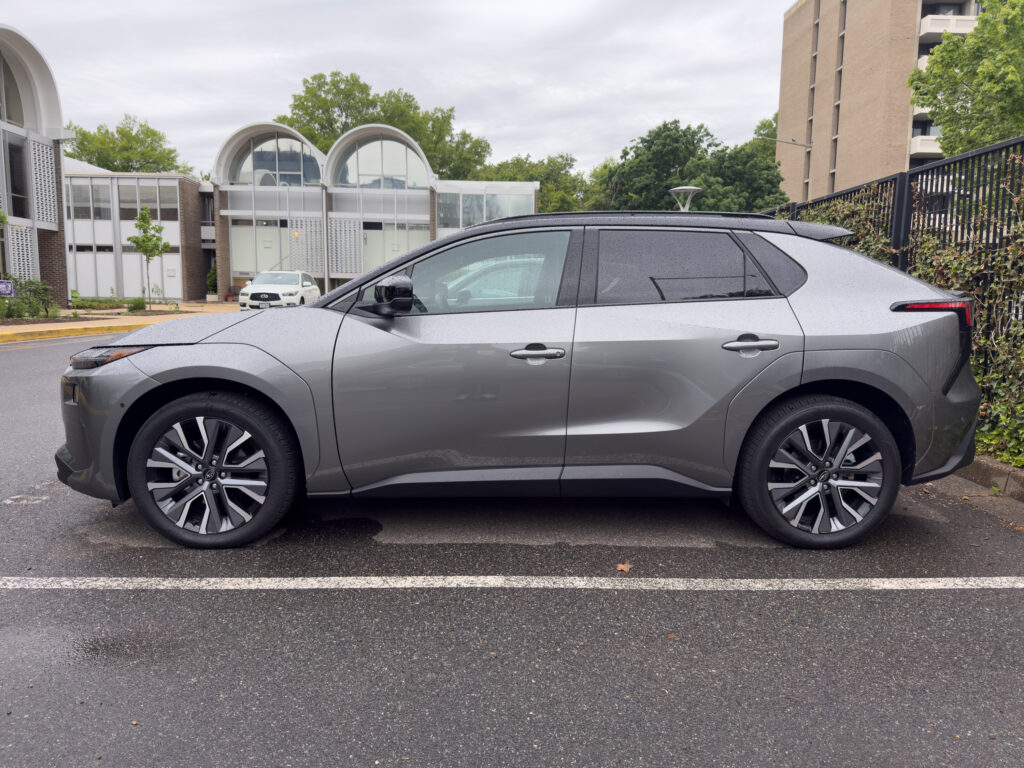
    Subaru Solterra in profile
    From the side, it's nearly identical to the bZ. Credit: Jonathan Gitlin

    The range increase didn't require something like a decrease in power—in fact, the standard Solterra got a few extra horsepower, taking it to 233 hp (174 kW) from a pair of identical front and rear motors. But alongside the standard powertrain, Subaru now offers the Solterra XT. It almost doubles power to the front motor—it now makes 223 hp (167 kW) to go with the rear's 117 hp (87 kW), for a combined 338 hp (252 kW). There's a small range toll to pay, with an EPA estimate of 278 miles (447 km) for the XT. There's also a slightly larger price tag: The base Solterra starts at $38,495, but the cheapest Solterra XT costs $42,895.

    Read full article

    Comments

    • chevron_right

      How some data center operators are tackling their water use problems

      news.movim.eu / ArsTechnica • 4 June 2026

    On Monday, SpaceX amended its initial public offering to state that water conditions—including water scarcity, regulations around water, and drought—could constrain data center development.

    It isn’t the only tech company trying to assess how water scarcity might impact its business. Water use is emerging as one of the most contentious data center issues . A recent Gallup poll found that seven out of 10 Americans are opposed to data center development, with water scarcity ranking as the top resource concern. Facing increasingly fierce resistance, some tech companies are scrambling to assure the public that they’re facing the issue head-on.

    Data centers primarily use water to cool server racks, which throw off massive amounts of heat. One popular technique, known as evaporative cooling, uses fresh water to absorb the heat, which is then pumped to cooling towers where it evaporates outside.

    Read full article

    Comments

    • chevron_right

      My SSN was exposed in a breach at Columbia—a school I have no connection with

      news.movim.eu / ArsTechnica • 4 June 2026

    A weird text from my dad in February sent me on a months-long quest to solve a mystery that has been troubling an odd group of victims from a Columbia University data breach last year. That group? People with absolutely no connection to the school.

    The text included a photo of a letter from Columbia, informing me that I was a victim of a data breach last June, one that exposed a wide range of sensitive information, including 1.8 million Social Security numbers.

    Columbia's public notices about the breach were addressed exclusively to "members of the Columbia community." In the notices, Columbia warned that an "unauthorized party obtained information about students and applicants related to admissions, enrollment, and financial aid processes, as well as certain personal information associated with some Columbia employees." Major news reports that followed only referenced people affiliated with Columbia as victims, while pointing out that the hacktivist behind the breach was reportedly motivated to expose Columbia's history of "affirmative action-based" admissions.

    Read full article

    Comments