
• chevron_right

      Spider-Noir final trailer gives us a classic villain

      news.movim.eu / ArsTechnica • 19 May 2026 • 1 minute

    Prime Video has released one last trailer for its upcoming live action series, Spider-Noir , starring Nicolas Cage, and once again it's been released in two formats: one in black and white (below) and another in color (above), which the showrunners are calling “True Hue.” Seriously, the more footage we see of this series, the more eager we are to find out if the series lives up to its marketing. And the final trailer—which really plays up the deadpan humor and is set to Amy Winehouse's " Back to Black "—is very promising.

    As previously reported , Marvel Comics created its “noir” line in 2009, reinterpreting familiar Marvel characters in an alternate universe, usually set during the Great Depression in the US. A version of the Spider-Noir character, voiced by Cage, briefly appeared in the animated masterpieces Spider-Man: Into the Spider-Verse (2018) and Across the Spider-Verse (2023). (He is set to reprise that role in the upcoming Beyond the Spider-Verse .)

    Cage is playing Ben Reilly, a hard-boiled PI with a secret superhero identity, The Spider. Per the official premise: “ Spider-Noir tells the story of Ben Reilly, a seasoned, down on his luck private investigator in 1930s New York, who is forced to grapple with his past life, following a deeply personal tragedy, as the city’s one and only superhero.”
    Read full article

    Comments

    • chevron_right

      "I'll buy 10 of those"—NASA science chief yearns for mass-produced satellites

      news.movim.eu / ArsTechnica • 19 May 2026

    There are more opportunities to access space than ever, thanks to a bevy of commercial rockets, some with reusable boosters, led by SpaceX's workhorse Falcon 9. So why is NASA launching fewer telescopes and planetary science missions than it did a quarter-century ago?

    The answer is complex. It is not necessarily the money. The space agency's science budget this year is $7.25 billion, roughly the same as it was in 2000, adjusted for inflation. This is despite attempts by the Trump administration to drastically reduce NASA science funding.

    In the early months of his tenure, NASA Administrator Jared Isaacman's focus has been on human spaceflight and the Moon. This isn't terribly surprising given NASA's wildly successful Artemis II mission carrying four astronauts around the Moon last month. Since taking office in December, Isaacman has announced an overhaul of the Artemis program, canceling a space station to be built in orbit around the Moon in favor of construction of a base on the lunar surface.

    Read full article

    Comments

    • chevron_right

      Plex's 200% Lifetime Pass price hike tries forcing users to another subscription

      news.movim.eu / ArsTechnica • 19 May 2026

    As of July 1, at 12:01 am UTC—or June 30 at 8:01 pm ET—people seeking access to Plex's media server features through a one-time purchase will have to pay $750. That’s three times the current price of $250.

    The new price will not affect current Lifetime Plex Pass holders.

    A Lifetime Plex Pass allows you to stream from your own Plex Media Server to a device connected to your own network, to stream from the server remotely, and to allow others to stream remotely from your server.

    Read full article

    Comments

    • chevron_right

      Two AI-based science assistants succeed with drug-retargeting tasks

      news.movim.eu / ArsTechnica • 19 May 2026 • 1 minute

    On Tuesday, Nature released two papers describing AI systems intended to help scientists develop and test hypotheses. One, Google's Co-Scientist, is designed as what they term "scientist in the loop," meaning researchers are regularly applying their judgements to direct the system. The second, from a nonprofit called FutureHouse, goes a step beyond and has trained a system that can evaluate biological data coming from some specific classes of experiments.

    While Google says its system will also work for physics, both groups exclusively present biological data, and largely straightforward hypotheses—this drug will work for that. So, this is not an attempt to replace either scientists or the scientific process. Instead, it's meant to help with the things that current AIs are best at: chewing through massive amounts of information that humans would struggle to come to grips with.

    What's this good for?

    There are some distinctions between the two systems, but both of them are what is termed agentic; they operate in the background by calling out to separate tools. (Microsoft has taken a similar approach with its science assistant as well; OpenAI seems to be an exception in that it simply tuned an LLM for biology .) And, while there are differences between them that we'll highlight, they are both focused on the same general issue: the utter profusion of scientific information.

    Read full article

    Comments

    • chevron_right

      Google's SynthID AI watermarking tech is being adopted by OpenAI, Nvidia, and more

      news.movim.eu / ArsTechnica • 19 May 2026 • 1 minute

    In a few short years, we've gone from easily identifying AI content that featured superfluous fingers to images and videos that look shockingly realistic . How can we know what's real in the age of AI? Google's answer is SynthID, which it first demonstrated three years ago. The company says SynthID has since been used to label 100 billion images and videos, plus 60,000 years' worth of audio. Those numbers are only going up now that SynthID is expanding beyond Google.

    SynthID is not Google's only AI labeling strategy. It's also committed to the C2PA standard, which tags content with metadata describing how it was created. Google began using C2PA more prominently with its Pixel 10 smartphones. Photos taken with the Pixel 10 include metadata describing how they were processed. If a highly zoomed image includes generative elements, it gets an AI tag, too.

    Google now says this same feature is coming to videos recorded on Pixel 8, 9, and 10 phones in an update in the coming weeks. It's also adding C2PA scanning to Gemini, allowing the chatbot to explain a file's providence based on the content labeling. This same capability will come to Chrome and Search in a few months.

    Read full article

    Comments

    • chevron_right

      In stunning display of stupid, secret CISA credentials found in public GitHub repo

      news.movim.eu / ArsTechnica • 19 May 2026

    Security researcher Brian Krebs brings us the news that America's Cybersecurity & Infrastructure Agency (CISA) has had a large store of plaintext passwords, SSH private keys, tokens, and "other sensitive CISA assets" exposed in a public GitHub repo since at least November 2025.

    The now-offline public repo—named, somewhat aspirationally, "Private-CISA"—was brought to Krebs' attention by GitGuardian's Guillaume Valadon , who was alerted to the repo's presence by GitGuardian's public code scans. Krebs says that Valadon approached him after receiving no responses from the Private-CISA repo's owner.

    In an email to Krebs, Valadon claimed that the repo's commit logs show that GitHub's default protections against committing secrets—protections designed to protect unwitting or unskilled developers against exactly this kind of stupidness—had been disabled by the repo's administrator.

    Read full article

    Comments

    • chevron_right

      RFK Jr. forced to withdraw charter that opened CDC panel to anti-vaccine quacks

      news.movim.eu / ArsTechnica • 19 May 2026

    A revised charter document for the Centers for Disease Control and Prevention's influential vaccine advisory committee has been withdrawn by the Health Department over an administrative error, according to a notice published in the Federal Register Tuesday .

    The charter's revisions under anti-vaccine Health Secretary Robert F. Kennedy Jr. would have allowed Kennedy to appoint dubiously qualified anti-vaccine allies to advise the CDC. It also would have directed the CDC panel to focus on alleged vaccine injuries and risks and welcomed fringe groups and anti-vaccine organizations to participate in developing federal vaccine policy.

    Kennedy's move to reshape the CDC panel—the Advisory Committee on Immunization Practices, or ACIP—came amid Kennedy's many other attempts to undermine it, as well as a court order to undo that meddling.

    Read full article

    Comments

    • chevron_right

      Google announces agent-optimized Gemini 3.5.Flash and a do-anything model called Omni

      news.movim.eu / ArsTechnica • 19 May 2026

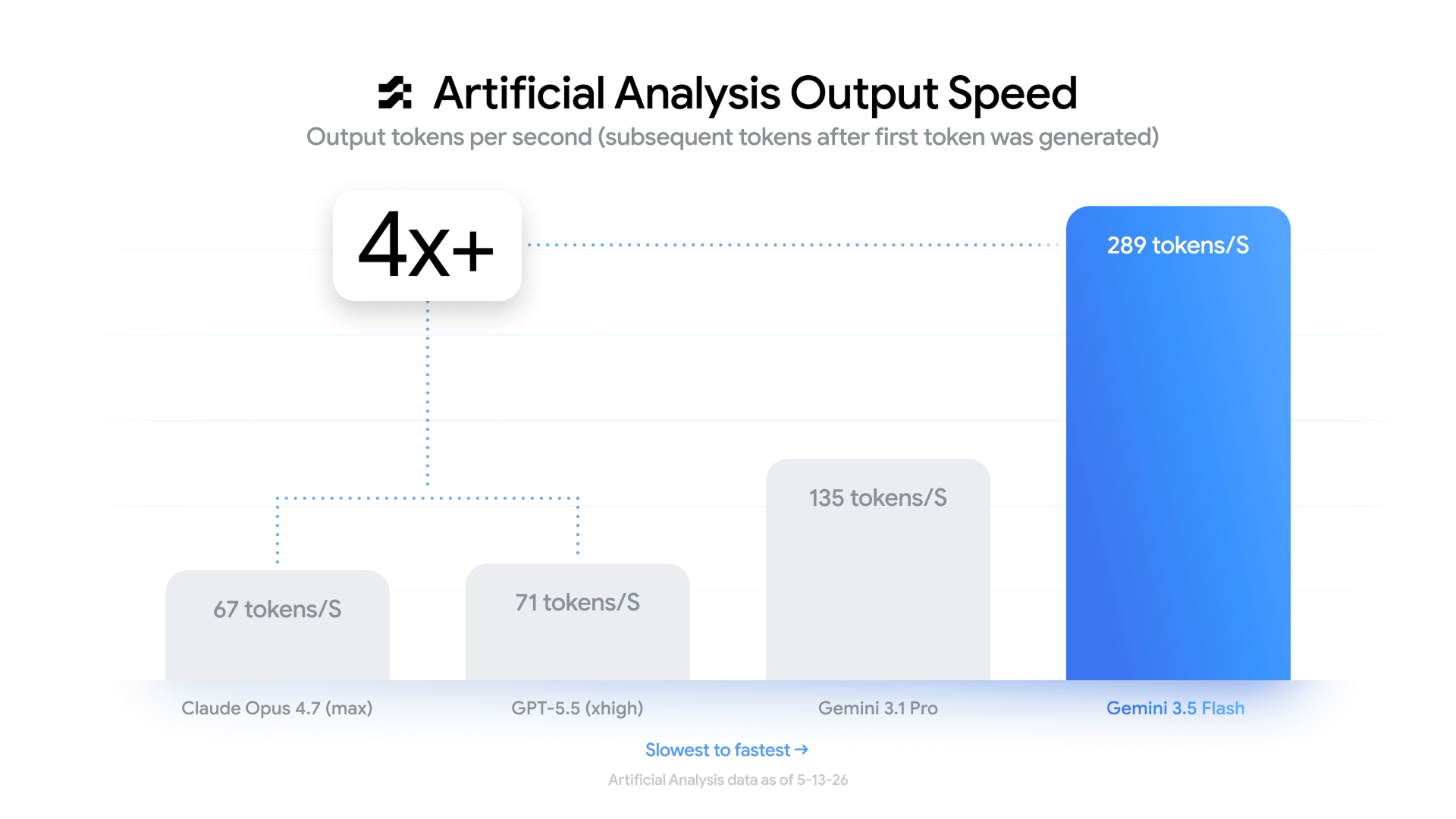
    At last year's I/O event, Google was still talking about the 2.5 branch of Gemini, and what a difference a year makes. We've gone through the 3.0 and 3.1 families since then, and now it's on to version 3.5. Gemini 3.5 Flash is rolling out across a wide range of Google products starting today, and Google again claims this model is even better than its last-gen Pro model.

    That has been a trend with Google's tick-tock model updates over the past year, but the team says this release is special. Gemini 3.5 Flash allegedly offers frontier-level intelligence while also being efficient enough that it may finally make complex agentic tasks worth doing at scale. Tulsee Doshi, senior director of product management for Gemini, explains that the innovations of Gemini 3.5 Flash are woven through multiple Google products, and this is just the start.

    Credit: Google

    Read full article

    Comments

    • chevron_right

      The era of 1,000 Hz gaming monitors has arrived, but why?

      news.movim.eu / ArsTechnica • 19 May 2026 • 1 minute

    Almost exactly two years ago, we were gawking at prototypes of 1,000 Hz monitors and wondering who really needed a display that could support such ludicrously smooth frame rates. Now that those prototypes are starting to develop into retail products, we're still wondering how much of a market there is for gaming displays that can update with a new frame every single millisecond.

    The latest entry in the ultra-fast refresh race is LG's 24.5" UltraGear 25G590B, which the company announced this week as "the world’s first Full HD gaming monitor with a native 1000Hz refresh rate" ahead of a planned launch in "select markets" in the second half of the year. That "Full HD" promise means LG's 1,000 Hz display hits the 1080p threshold that is by far the most common resolution reported by gamers in Steam's regular hardware surveys .

    That would represent a decent step up from the likes of Acer's Predator XB273U F6 , Samsung's Odyssey G6 , or Phillips' EVNIA 27M2N5500XD , all of which have to shift down to a relatively blurry 720p resolution to run at a full 1,000 Hz (but which support 1440p resolutions at a still-quite-fast 500 Hz). LG also notes that its high-end monitor can hit its resolution and refresh rate specs natively, without the need for any "dual mode" rebooting shenanigans to get the fastest performance.

    Read full article

    Comments